

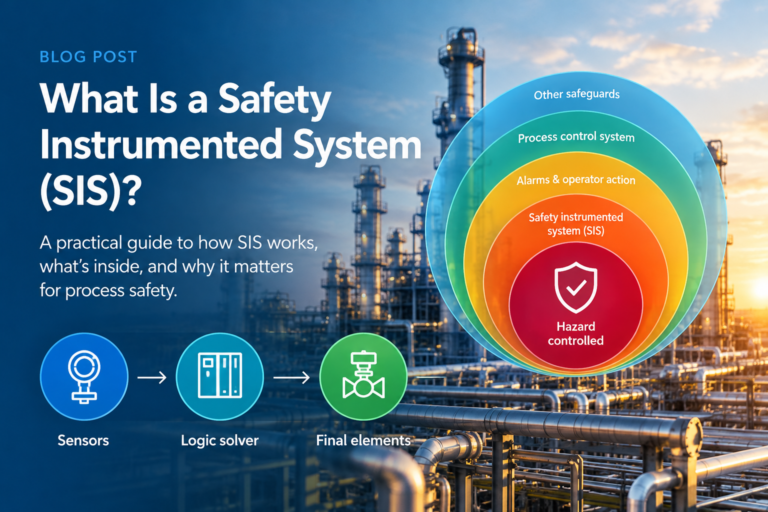
What Is a Safety Instrumented System (SIS)? A Practical Guide
Onions in Your Plant If you have ever attended process safety training, you have probably seen the “Onion” model. It shows how different protective systems can be arranged as concentric layers…

Building a Safety Requirements Specification: Why Your SRS Matters
Not Sexy, But Needful Functional safety is where process safety meets automation. Instead of relying solely on operators or passive protection, Safety Instrumented Functions (SIFs) can automatically detect hazardous process conditions and…

Alarm Management: Turning Process Alarms into an Effective Layer of Protection
When an Alarm Stops Being Useful, It Stops Being Protection Walk into a modern process control room and you may see thousands of alarms configured across the plant. Alarms are…

The Alarm Philosophy Document: Why a Generic Approach Doesn’t Work
Why Alarms Matter In a process control room, alarms exist for one important reason: to tell the operator when intervention is needed to prevent an undesired event. For example, reactor pressure…

Used Vizop in a Four-Week HAZOP and LOPA Workshop – PTT Thailand (Case Study)
A HAZOP software application can look impressive in a product demonstration. But the real test comes when it is used for weeks in a live workshop, under the pressure of…
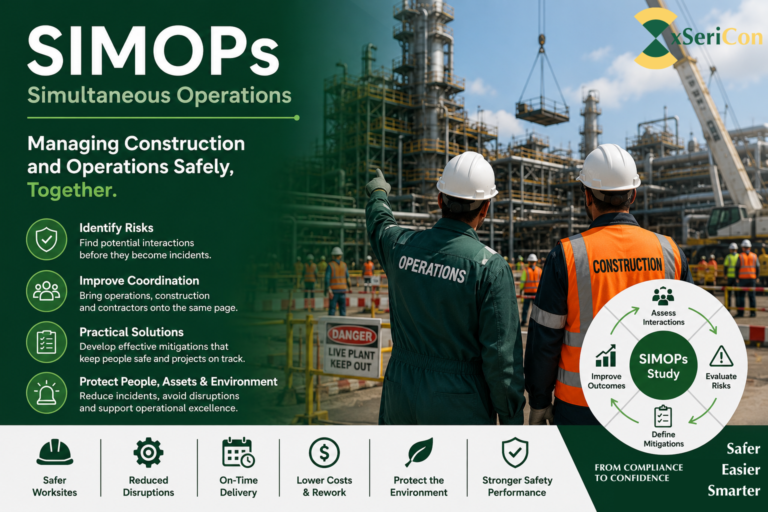
SIMOPs Explained: How to Manage Simultaneous Operations Safely
Avoiding “Them and Us”: Managing SIMOPs Safely We know most industrial facilities tried their best to manage hazardous process operations safely. Construction projects also have well-established safety procedures. But what…

Why HAZOP Studies Age Faster Than You Think? And How to Survive Re-HAZOP?
Avoiding the Risks of Operational Drift Through Effective HAZOP Revalidation You’ve just completed a major HAZOP study for a new process facility. The workshop took weeks to prepare, involved a…

Smoothing Out the Stress in Your PHA Workshop
Is your PHA Workshops Slow and Challenged? Do you like your peanut butter smooth, or crunchy? I’m definitely a crunchy peanut butter person — but when it comes to running…
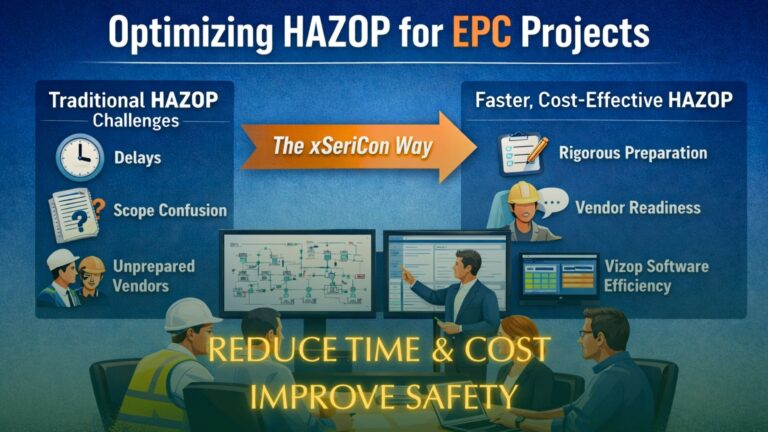
How EPCs Can Reduce HAZOP Time and Costs (Via Proven Methodology)
Why do HAZOP Workshops Slow Down EPC Projects? For every FEED and EPCIC project, HAZOP workshops are a necessary—but often inefficient—part of project execution. Common challenges include: These issues turn…